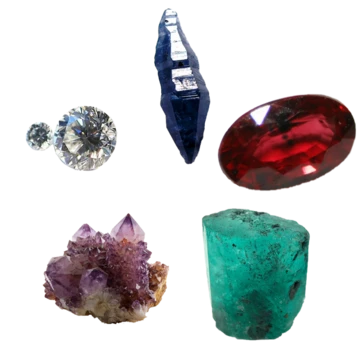
Aquamarine
A pale-blue to light-green beryl gemstone used in jewelry.

EmbodimentofAlterity · CC0
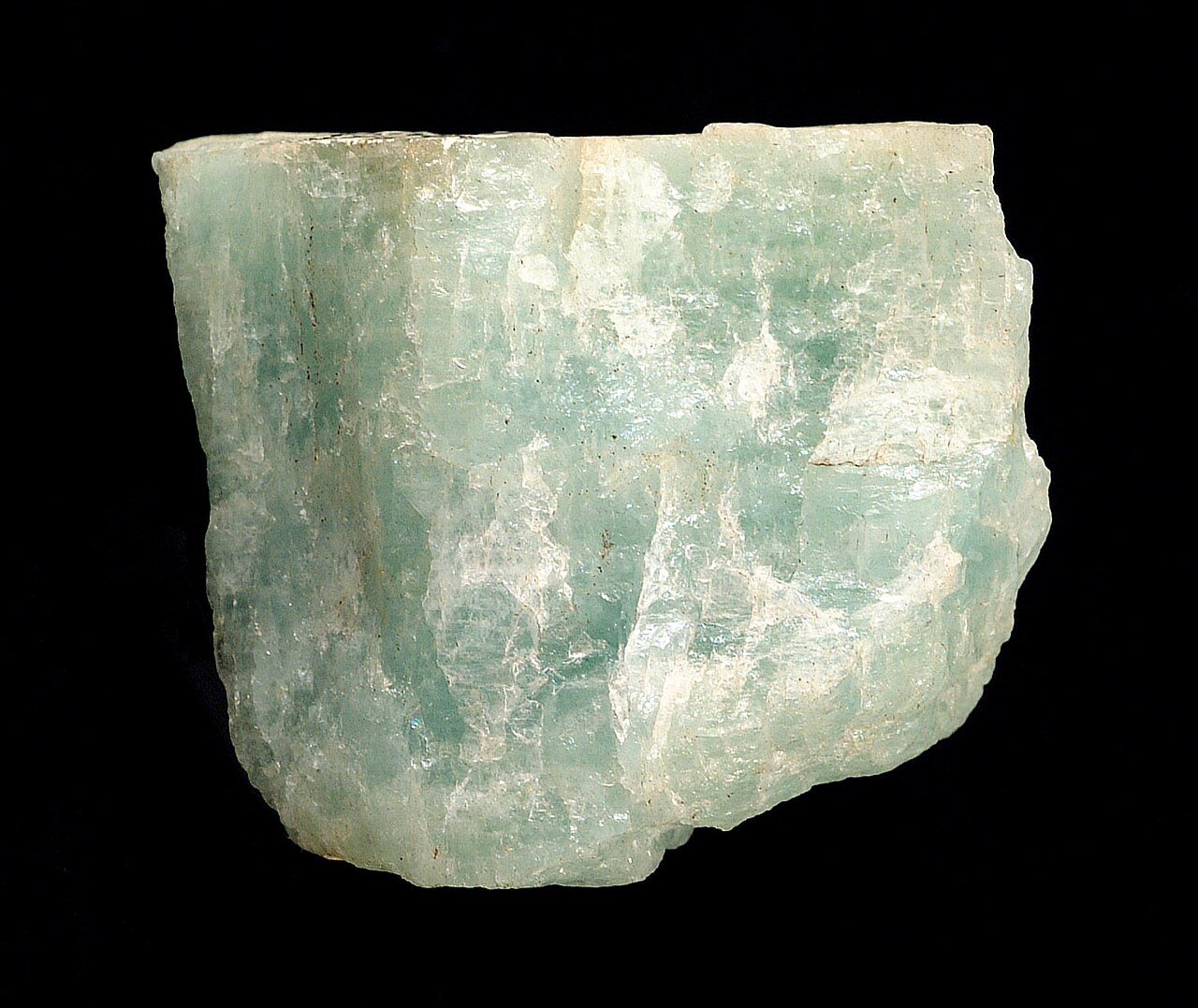
Aquamarine is a pale-blue to light-green variety of the beryl family, known for its hexagonal crystal system and transparency. It is a fairly common gemstone, making it more accessible for purchase compared to other beryl gems, and is most commonly used for jewelry, decoration, and its properties.
- chemical_formula
- Be3Al2Si6O18 with Fe2+
- hardness
- 7.5–8 on Mohs scale
- crystal_system
- Hexagonal
- color
- Blue with hues of green
- birthstone
- March
- major_source
- Minas Gerais, Brazil
Lore & Background
It has been used as a modifier for other minerals like aquamarine tourmaline and aquamarine topaz. Aquamarine mainly forms in granite pegmatites and hydrothermal veins over millions of years, associated with Precambrian rocks. Its blue color with green hues is caused by trace amounts of iron in the crystal structure. The gem is chemically stable, resistant to acids, and often contains no inclusions, though it may contain mica, hematite, saltwater, biotite, rutile, or pyrite.
Reader's Guide
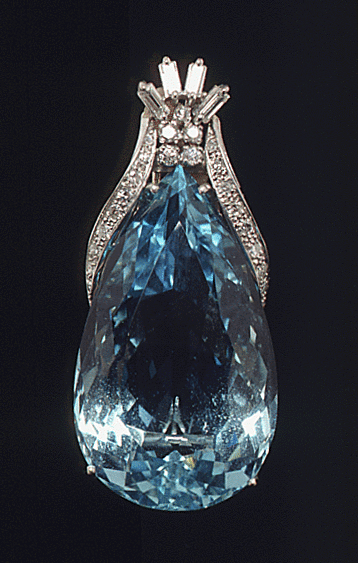
Aquamarine's value is determined by weight, color, cut, and clarity. Due to its relative abundance, it is less expensive than emerald or bixbite but typically more expensive than similarly colored gemstones like blue topaz. Heat treatment is sometimes performed to alter color, with naturally occurring blue specimens being more expensive. Cut aquamarines over 25 carats have a lower price per carat than smaller ones of the same quality. The gem is the birthstone for March and has historically symbolized youth and happiness. Ancient tales claimed it came from mermaid treasure chests, and sailors used it as a lucky charm against shipwreck. Ancient Romans believed it had healing properties.
Did You Know?
- Aquamarine is the birthstone for the month of March.
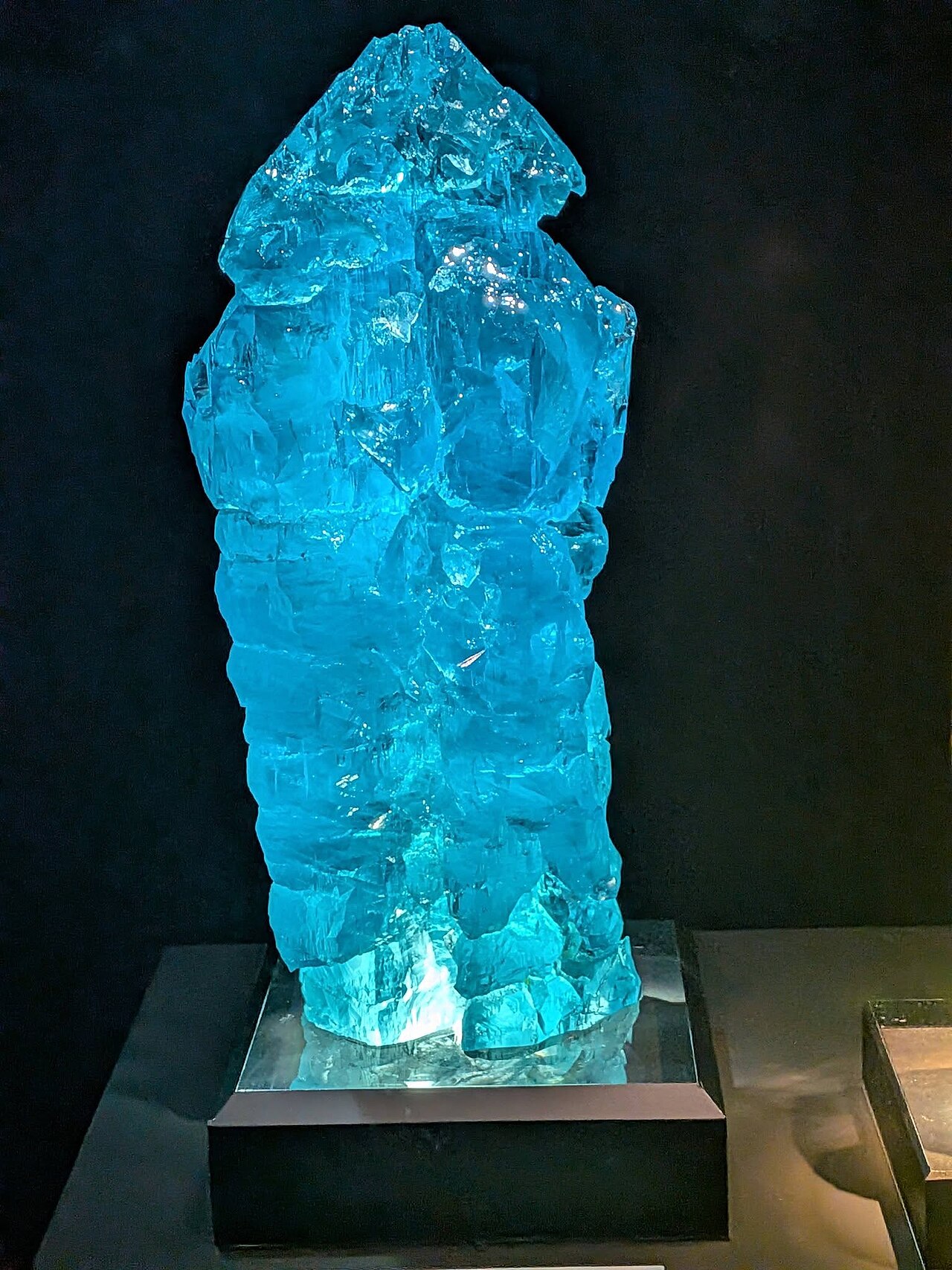
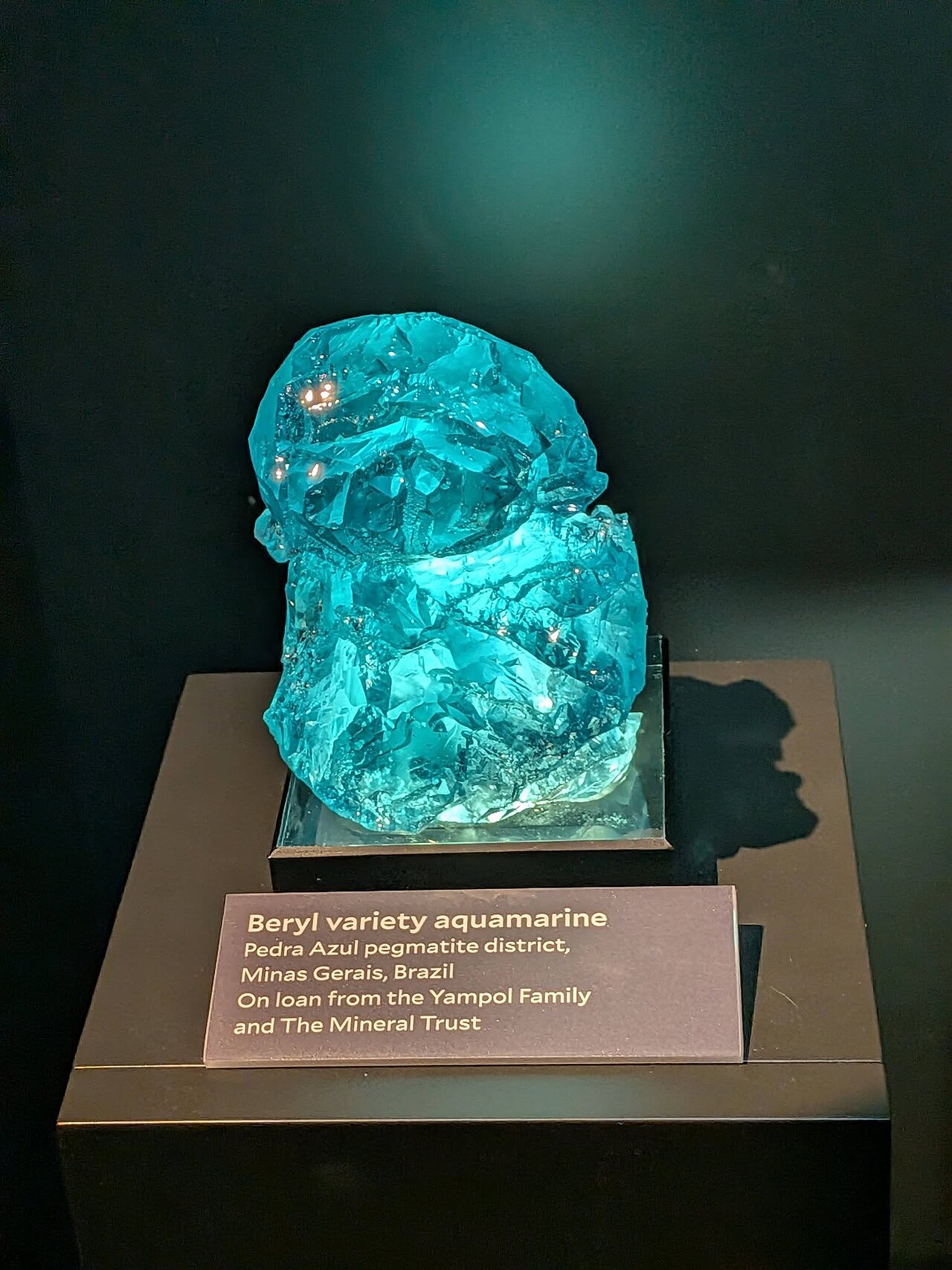
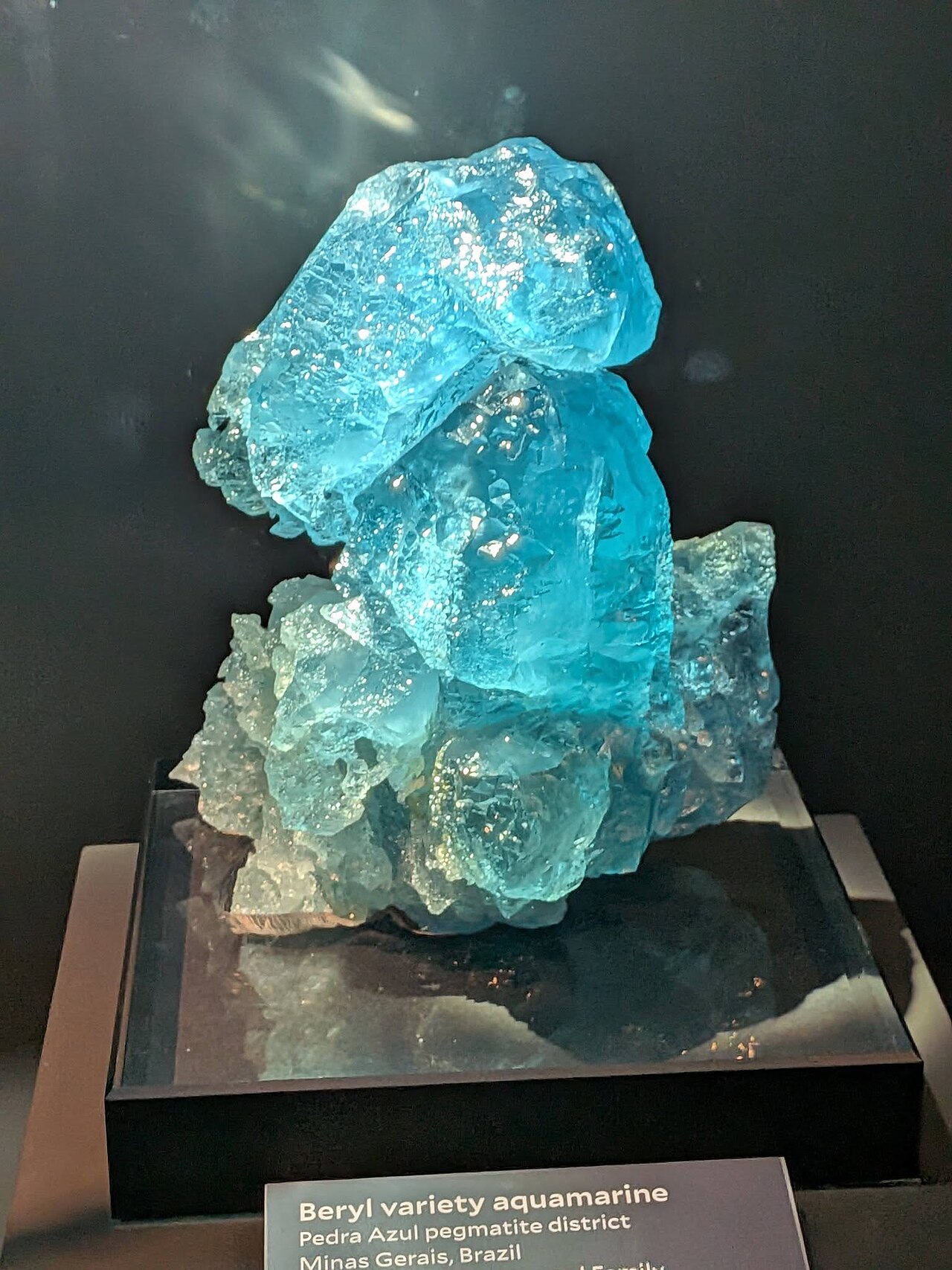
- The largest known example is the Dom Pedro aquamarine, found in Pedra Azul, Minas Gerais, Brazil, in the late 1980s.
Geological Origins & Crystal Architecture
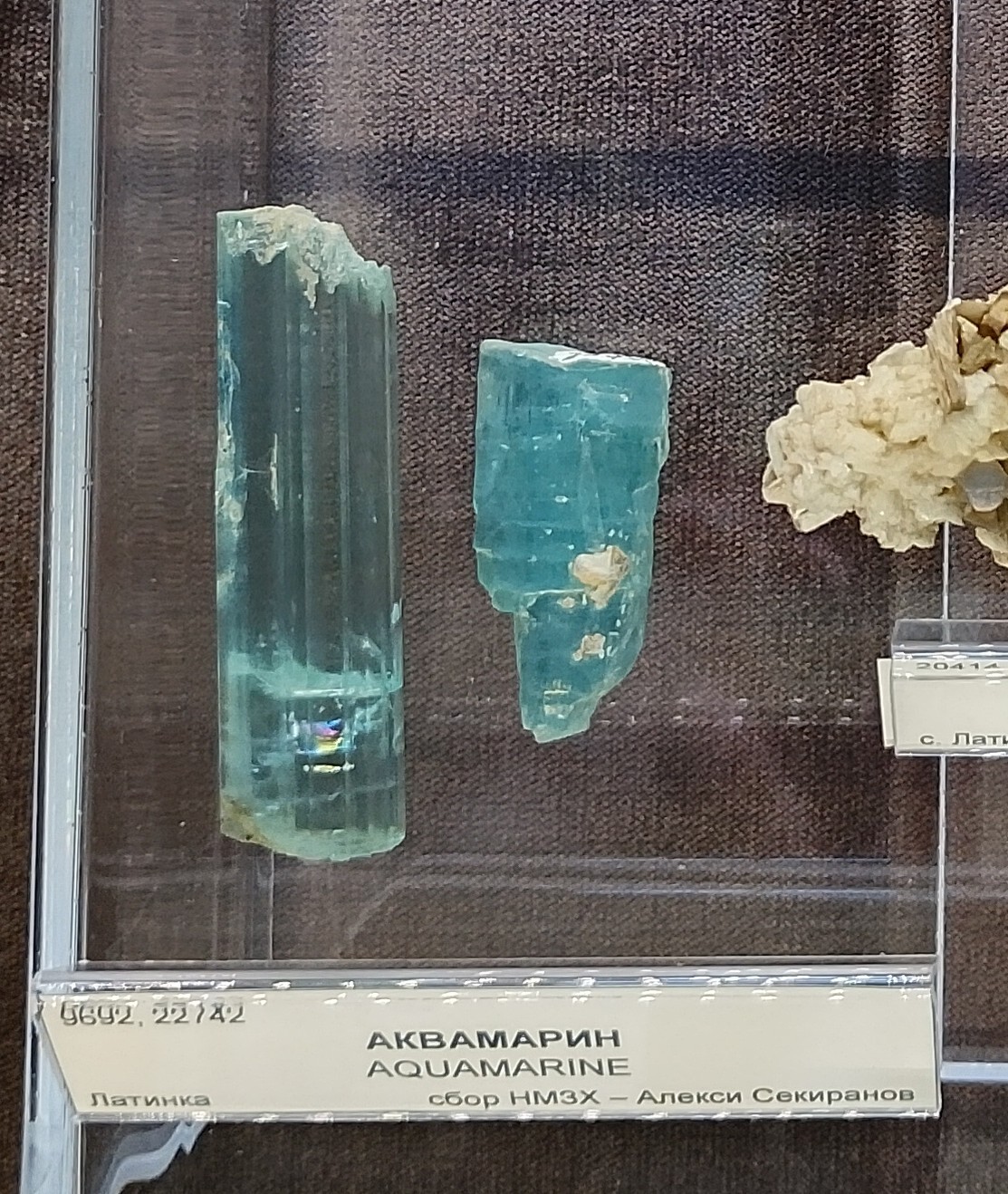
Aquamarine takes shape deep within the Earth's crust over millions of years, primarily in two geological settings: granite pegmatites and hydrothermal veins. Pegmatites represent the final crystallization phase of granitic magma, leaving behind a residual melt packed with volatile elements—silicon, aluminum, and crucially, beryllium. This beryllium-rich environment, combined with trace iron (Fe2+), gives the resulting crystal its signature pale-blue to light-green palette. The mineral also forms when hot, mineral-laden hydrothermal fluids precipitate their dissolved components into solid mineral deposits. Both processes are linked to Precambrian rock formations. Crystallographically, aquamarine belongs to the hexagonal system, growing as prismatic crystals with a hexagonal cross-section. These formations range from microscopic specks to truly massive specimens, and their faces often display distinctive vertical striations. The chemical formula Be3Al2Si6O18 places it firmly in the beryl family alongside emerald, morganite, and heliodor. With a Mohs hardness of 7.5 to 8, a vitreous-to-resinous lustre, and remarkable resistance to acids, aquamarine is both durable and chemically stable.
Market Position & Color Science
Within the beryl family, aquamarine occupies a distinctive middle ground in the gem market. Its relative abundance makes it far more accessible to buyers than emerald or red beryl, yet it still commands a premium over similarly hued stones like blue topaz. Pricing is governed by the classic four Cs—weight, color, cut, and clarity—with naturally occurring blue specimens commanding higher prices than those that have undergone heat treatment to suppress yellowish tones introduced by ferric iron. Stones exceeding 25 carats see their per-carat value drop relative to smaller counterparts of equal quality. Color in aquamarine is fundamentally an iron story. Trace Fe2+ ions embedded in the crystal lattice produce the blue-to-green spectrum, ranging from the palest wash to vivid saturation. A rarer variant called maxixe exhibits a deeper blue caused by nitrate (NO3) groups, though this coloration is unstable and fades under prolonged sunlight. Interestingly, a dark-blue maxixe hue can be artificially induced in green, pink, or yellow beryl through high-energy irradiation using gamma rays, neutrons, or X-rays. The interplay of natural color, treatment, and size ultimately determines where a given stone sits on the value spectrum.
Cultural Resonance & Symbolic Heritage
This maritime association has driven centuries of folklore: ancient sailors carried aquamarine as a talisman against shipwreck, believing the gem originated from mermaid treasure chests. The Romans, noting the stone's near-invisibility when submerged, attributed healing virtues to it. In the Western tradition, aquamarine became the March birthstone and a lasting emblem of youth and happiness. Across civilizations, the gem found diverse artistic expression. Ancient Greeks carved it into intaglio seals; Chinese artisans fashioned it into ceremonial seals and decorative showpiece dolls; Japanese craftsmen incorporated it into netsuke, the small carved toggles used with traditional garments. In modern times, aquamarine has graced royal and celebrity jewelry—appearing in Queen Elizabeth's tiara, Meghan Markle's engagement ring, and the iconic Schlumberger bow. The word itself has bled into mineralogy as a color modifier for tourmaline, emerald, chrysolite, sapphire, and topaz.
Legendary Specimens & Global Provenance
Aquamarine is mined across an extraordinary range of countries, including Brazil, the United States, Russia, India, Madagascar, Nigeria, Kenya, Tanzania, Zambia, Zimbabwe, Mozambique, Malawi, Sri Lanka, Myanmar, Namibia, Australia, Afghanistan, Pakistan, and China. The Brazilian state of Minas Gerais stands out as a particularly prolific source, yielding aquamarine in granite pegmatites alongside companion minerals like muscovite, quartz, fluorite, smoky quartz, albite, schorl, microcline, cleavelandite, and morganite. The most celebrated specimen is the Dom Pedro aquamarine, discovered in Pedra Azul, Minas Gerais, in the late 1980s. Other famous aquamarines include the Roosevelt Aquamarine, the Hirsch Aquamarine, and the Schlumberger bow. These legendary stones, alongside the gem's presence in royal and celebrity jewelry, cement aquamarine's place as one of the most recognized and collected gemstones in the world.
Common Misconceptions (Editorial)
Some people mistakenly believe aquamarine is a rare and therefore expensive gemstone, but it is actually a fairly common beryl variety, making it more accessible for purchase. Another common misconception is that aquamarine is always a clear, pure blue; however, its color is blue with green hues caused by trace amounts of iron.
Why It Matters (Editorial)
Aquamarine endures as a beloved gemstone not only for its serene sea-blue color but also for its accessibility, allowing more people to own a piece of its tranquil beauty. Its deep connection to March birthdays and its formation over millions of years in Earth’s ancient rocks give it a lasting symbolic and geological significance that continues to captivate collectors and jewelry lovers alike.
Gallery
More in Gemstones 1-22
Spotted an error? Know more?
This is a living reference — every entry is fact-audited, and reader corrections feed straight into our audit queue. Suggest an edit · See this site's audit record