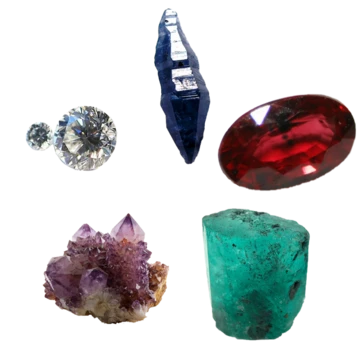
Topaz
A hard silicate gemstone used in jewelry and adornments.

Eric Polk · CC BY-SA 4.0
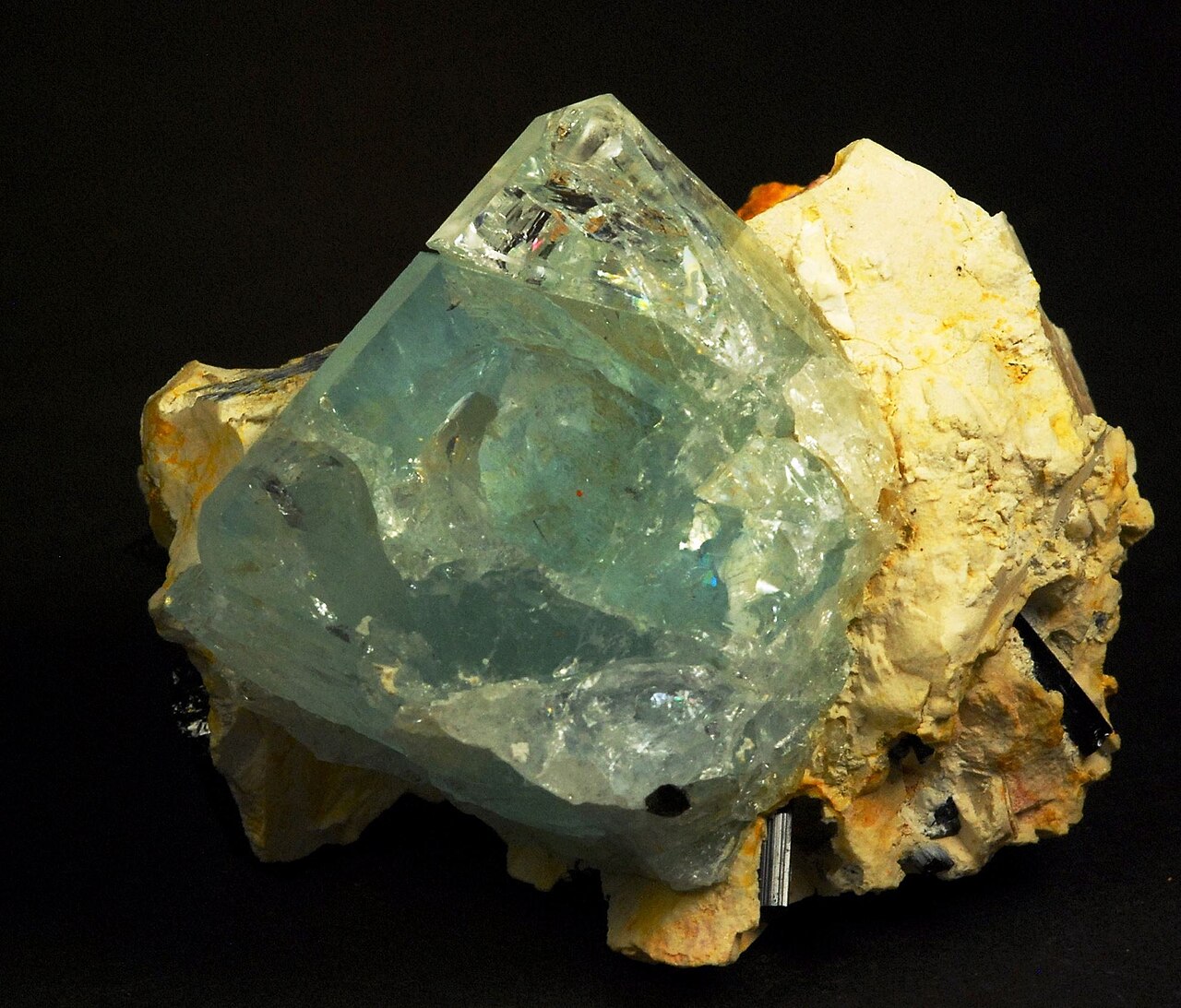
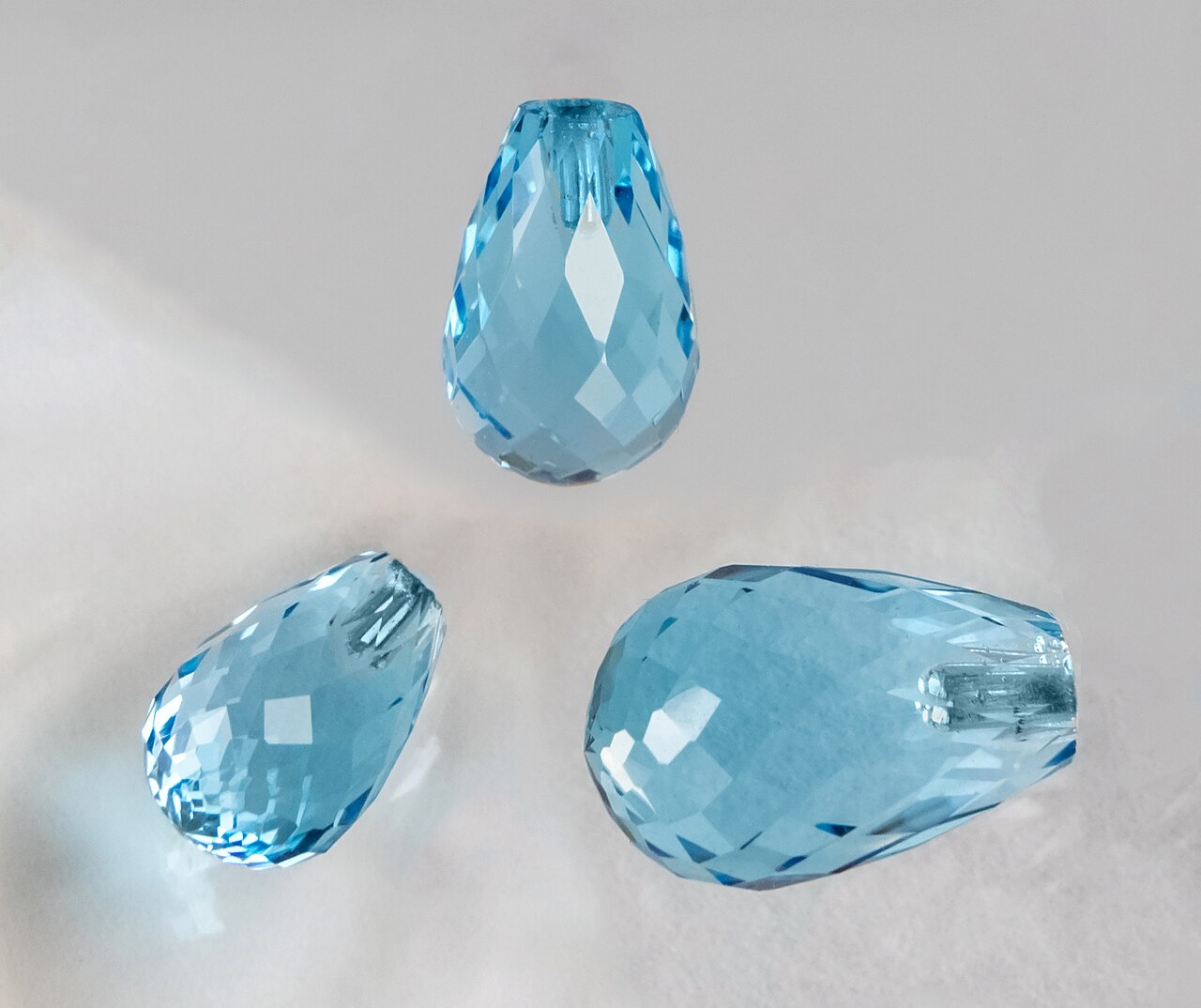
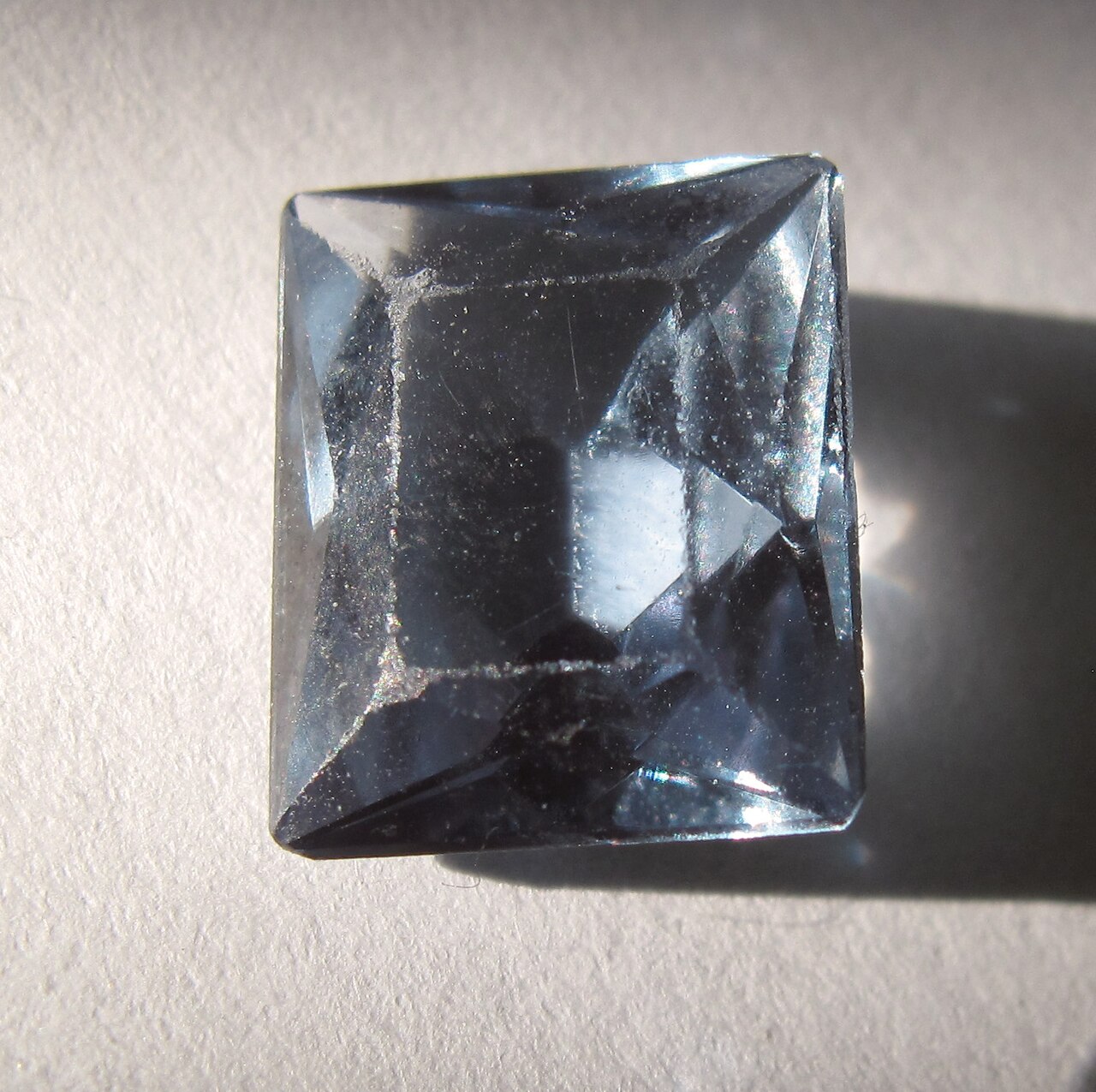
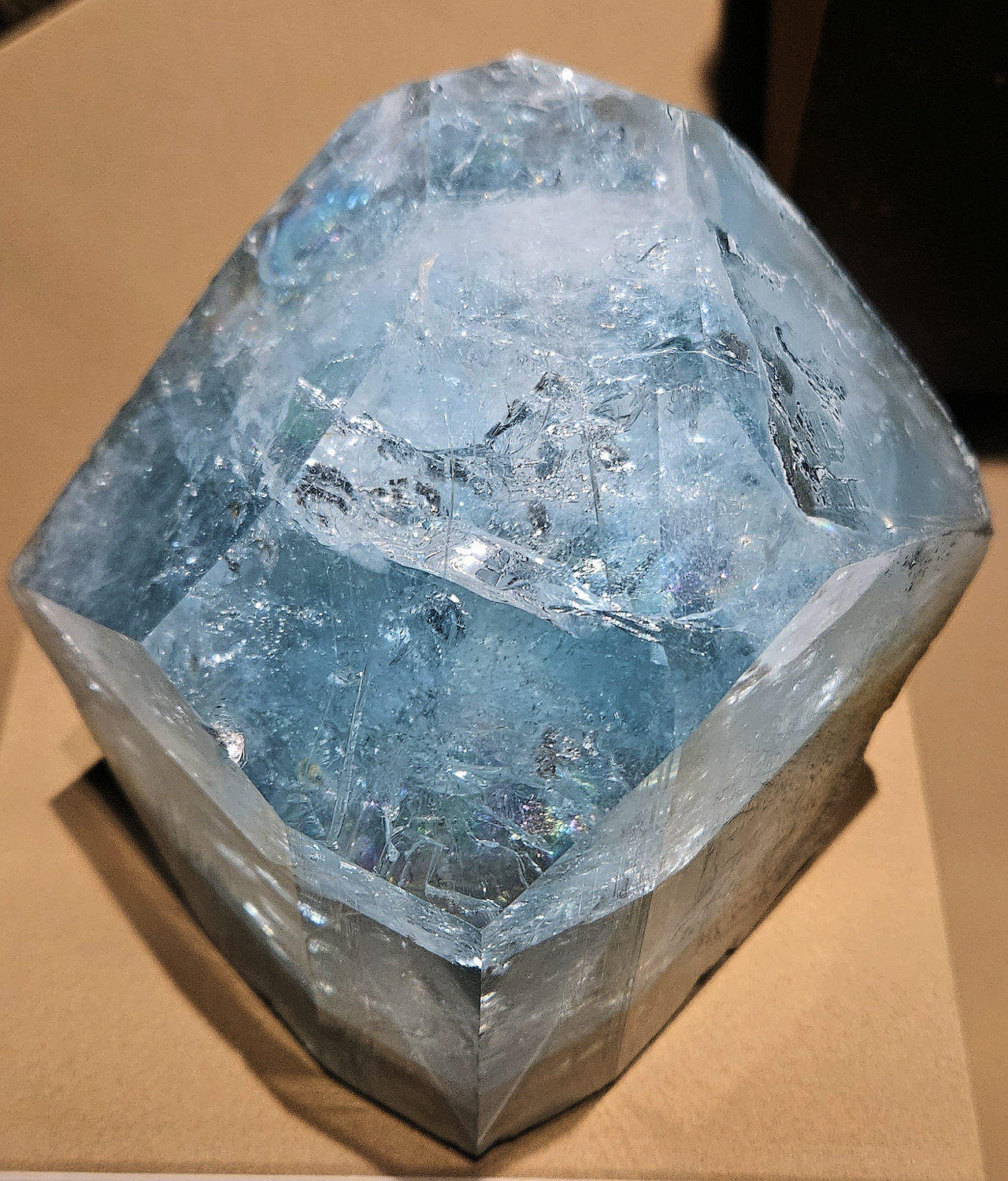
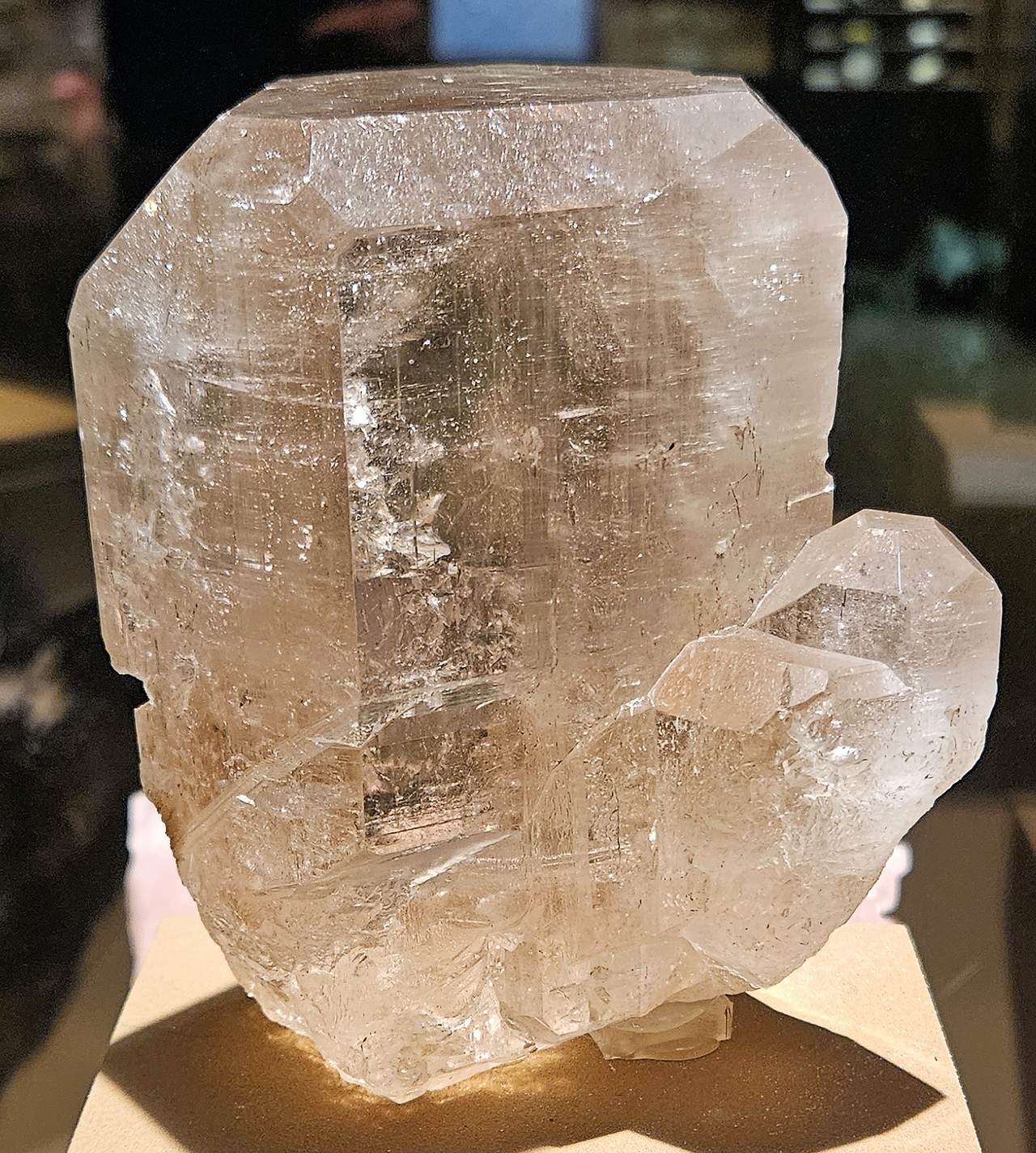
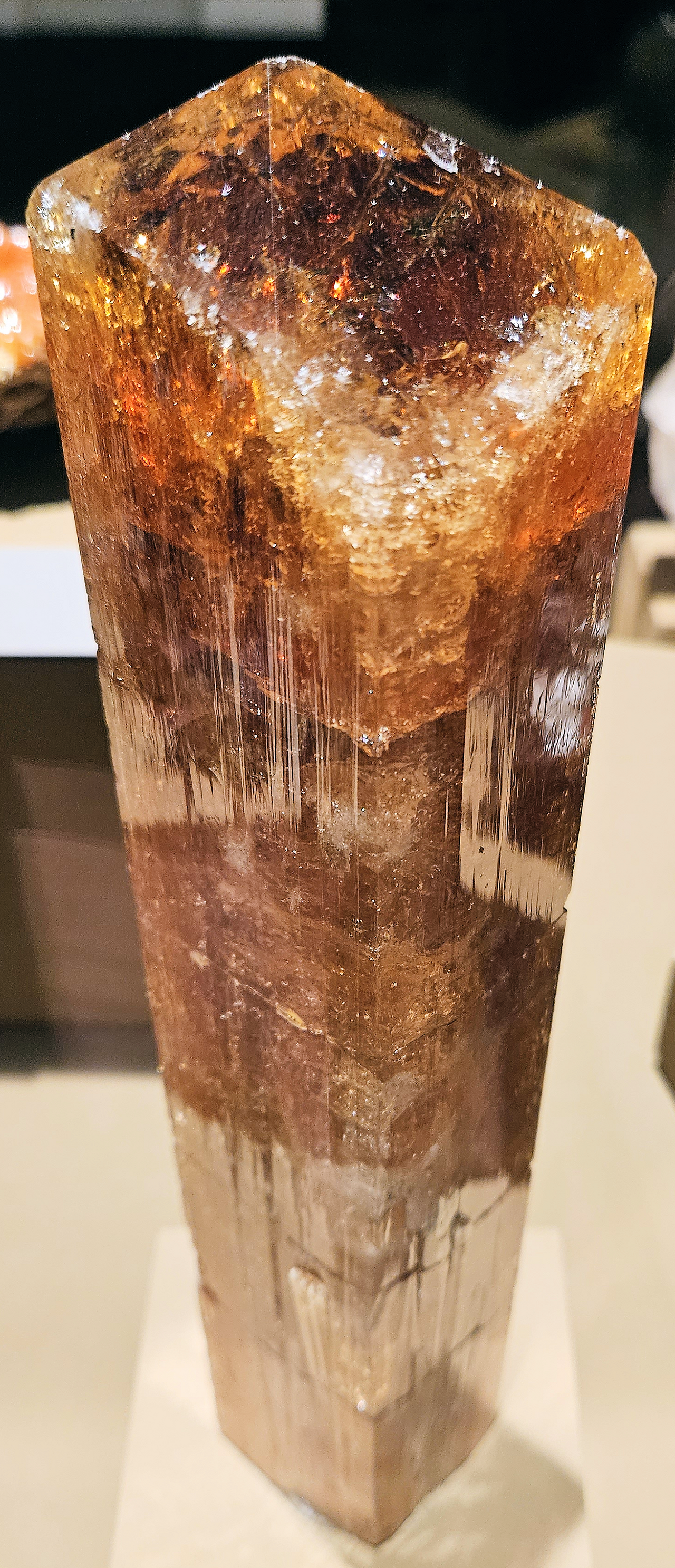
Topaz is a silicate mineral composed of aluminum and fluorine, with the chemical formula Al2SiO4(F, OH)2. It is used as a gemstone in jewelry and other adornments, and is one of the hardest naturally occurring minerals. Common topaz in its natural state is colorless, though trace element impurities can make it pale blue or golden-brown to yellow-orange, and it is often treated with heat or radiation to produce a range of colors.
- chemical_formula
- Al2SiO4(F, OH)2
- crystal_system
- Orthorhombic
- hardness
- One of the hardest naturally occurring minerals
- specific_gravity
- Considerably heavier than citrine (about 25% per volume)
- refractive_index
- Relatively low for a gemstone
- common_colors
- Colorless, pale blue, golden-brown to yellow-orange; treated to deep blue, reddish-orange, pale green, pink, or purple
Lore & Background
The word 'topaz' is usually believed to be derived from the Greek Τοπάζιος (Topázios), the ancient name of St. John's Island in the Red Sea, from which a yellow stone (now thought to be chrysolite) was mined. Ancient Sri Lanka exported topazes to Greece and ancient Egypt, and Pliny stated that Topazos is a legendary island in the Red Sea where the mineral was first mined. Alternatively, the word may relate to the Sanskrit word 'tapas', meaning 'heat' or 'fire'. In the Middle Ages, the name topaz was used for any yellow gemstone, but modern usage denotes only this silicate. Many English Bible translations mention topaz, but these likely refer to chrysolite rather than true topaz. An English superstition held that topaz cured lunacy; the ancient Romans believed it provided protection while traveling; and during the Middle Ages it was thought to ward off curses, increase body heat, and enhance mental powers. In India, people believed topaz granted beauty, intelligence, and longevity when worn over the heart.
Reader's Guide
Topaz is a gemstone of the second rank, or semiprecious stones, alongside aquamarine, morganite, and tourmaline. Orange topaz (precious topaz) is the birthstone for November, the symbol of friendship, and the state gemstone of Utah; blue topaz is the state gemstone of Texas. The 4th wedding anniversary gem is blue topaz and the 23rd is imperial topaz. Topaz is mined in many places, notably Brazil and Russia, often in open-pit or alluvial settings. Lower quality topaz is used as an abrasive and in refractory materials, though calcining topaz produces fluorine, raising health and environmental concerns. Care for topaz by avoiding ultrasonic cleaners or steam; warm water with soap is best. Ethically sourced topaz should come from a seller who knows the stone's origin.
Did You Know?
- Topaz is a nesosilicate and aluminosilicate mineral with an orthorhombic crystal system and dipyramidal crystal class.
- Brewsterlinite, a hydrocarbon liquid with a refractive index of 1.13, can be found in cavities within topaz.
- Mystic topaz is colorless topaz artificially coated via vapor deposition to produce a rainbow effect.
Chemistry & Crystal Architecture
Topaz belongs to the nesosilicate family, specifically classifying as an aluminosilicate with the formula Al2SiO4(F, OH)2. Its lattice follows the orthorhombic system within the dipyramidial class, and it ranks among the hardest minerals found in nature while maintaining a relatively low refractive index. In natural specimens, hydroxide can replace up to thirty mol percent of the fluorine. The 2V optical angle spans from 48 to 69.5 degrees, widening as fluorine content increases. Crystal habits range from slender, elongated prisms to stubby, bulky forms, with terminations that may appear blunt, pyramidal, chisel-like, or wedge-shaped. On occasion, tiny internal cavities hold a hydrocarbon liquid called brewsterlinite, first identified by David Brewster after he heated a sample and observed a loss of mass.
Etymology & the Long Confusion with Chrysolite
The name topaz carries a tangled history stretching back to antiquity. Tracing the word through Old French Topace and Latin Topazius, scholars connect it to the Greek Topázios or Topázion, the ancient designation for St. John's Island in the Red Sea. That island was notoriously hard to locate, and a yellow stone mined there—now thought to be chrysolite, or yellowish olivine—gave the name its earliest association. Ancient Sri Lanka, known in Greek sources as Topazius and in early Egyptian records as Topapwene meaning 'land of the Topaz,' shipped topazes to both Greece and Egypt. Pliny the Elder described Topazos as a legendary Red Sea island and the original source of the mineral. An alternative theory links the word to the Sanskrit tapas, meaning heat or fire. During the Middle Ages the label was applied loosely to any yellow gemstone, and even many English Bible translations, including the King James Version, use the word where the original Septuagint actually referred to chrysolite rather than true topaz.
Folk Beliefs, Symbolism & Modern Gemological Rank
Across centuries and continents, topaz has accumulated a remarkable collection of folk beliefs and symbolic meanings. In England, a persistent superstition held that the stone could cure lunacy. The ancient Romans credited it with shielding travelers from danger on their journeys. Medieval Europeans believed that fastening a topaz to the left arm would deflect curses and ward off the evil eye, while wearing it was thought to raise the body's heat enough to shake off a cold or fever. The same era linked topaz to enhanced mental powers. In India, tradition held that wearing the gem over the heart bestowed beauty, intelligence, and longevity. In modern gemological classification, topaz sits in the second rank of semiprecious stones alongside aquamarine, morganite, and tourmaline, below the first-rank precious stones of ruby, sapphire, diamond, and emerald. Orange topaz, sometimes called precious topaz, serves as November's birthstone and the symbol of friendship, while also holding the title of Utah's state gemstone. Blue topaz is Texas's state gemstone. In wedding traditions, blue topaz marks the fourth anniversary and imperial topaz the twenty-third.
Industrial Uses, Sourcing & Care of the Gemstone
Beyond its role in jewelry, topaz serves several industrial purposes. Its considerable hardness makes lower-grade material useful as an abrasive, and it is processed into refractory materials designed to withstand extreme temperatures. Topaz also functions as a flux in steel production, though calcining the mineral releases fluorine as a byproduct, raising both health and environmental concerns. In its natural state topaz is typically colorless with a greyish cast, though trace impurities can shift it toward pale blue or golden-brown and yellow-orange tones. Heat and radiation treatments produce the deep blue, reddish-orange, pale green, pink, and purple varieties seen in the market. Brazil and Russia are among the most popular sourcing regions, with mining often conducted in open-pit or alluvial settings. Care requires avoiding ultrasonic cleaners and steam, which can fracture the crystal; warm soapy water is the recommended method. Ethical buyers are advised to choose stones whose sellers can confirm the origin.
Common Misconceptions (Editorial)
Many people think topaz is always yellow, but common topaz in its natural state is actually colorless. Another misconception is that topaz is a rare or uniquely valuable gemstone, though it is one of the hardest naturally occurring minerals and is often treated to produce a wide range of colors. Additionally, some believe that Bible references to topaz refer to the modern mineral, but those likely refer to chrysolite rather than true topaz.
Why It Matters (Editorial)
Topaz endures as a gemstone not only for its hardness and versatility in color, but for a rich lore spanning ancient Greece, Rome, India, and the Middle Ages, where it was believed to protect travelers, cure lunacy, and enhance beauty and intelligence. This blend of physical durability and deep cultural symbolism ensures topaz remains a lasting subject of fascination in both science and human tradition.
Gallery
More in Gemstones 1-22
Spotted an error? Know more?
This is a living reference — every entry is fact-audited, and reader corrections feed straight into our audit queue. Suggest an edit · See this site's audit record