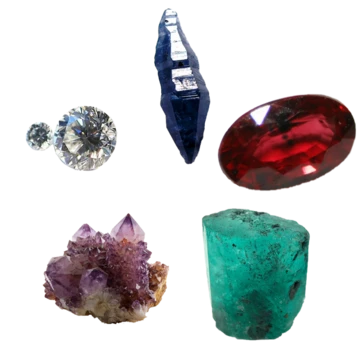
Garnet
Silicate minerals used as gemstones and abrasives since the Bronze Age.

James St. John · CC BY 2.0
Garnets are a group of silicate minerals used since the Bronze Age as gemstones and abrasives. They exhibit a wide range of chemical compositions, defining distinct species that fall into two primary solid solution series: the pyralspite series (pyrope, almandine, spessartine) and the ugrandite series (uvarovite, grossular, andradite). Although often associated with metamorphism, garnets can also occur in volcanic rocks on rare occasions.
- field
- Mineralogy
- known_for
- Gemstones and abrasives
- hardness_range
- 6.0 to 7.5 on Mohs scale
- crystal_system
- Cubic
- common_habits
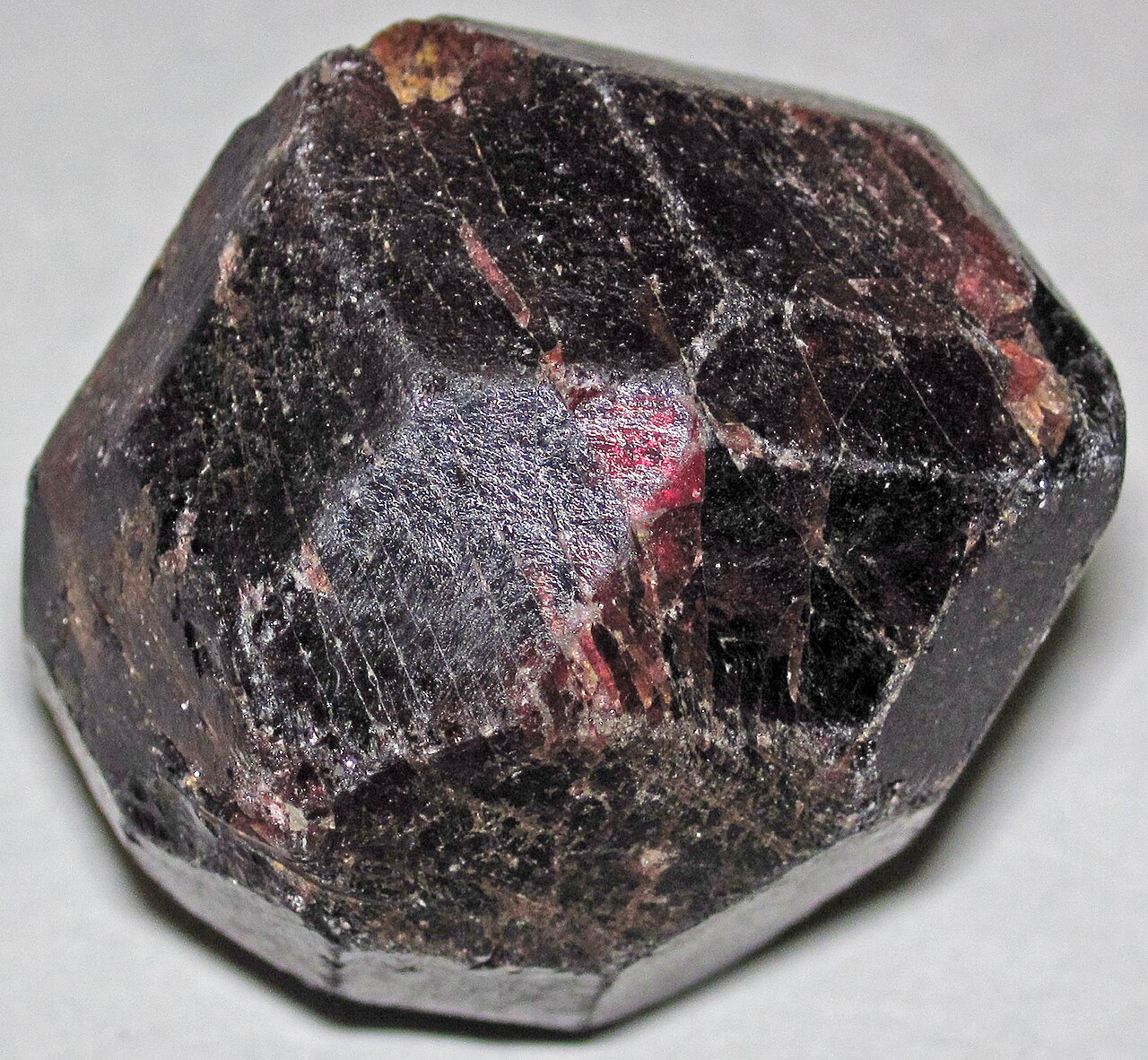
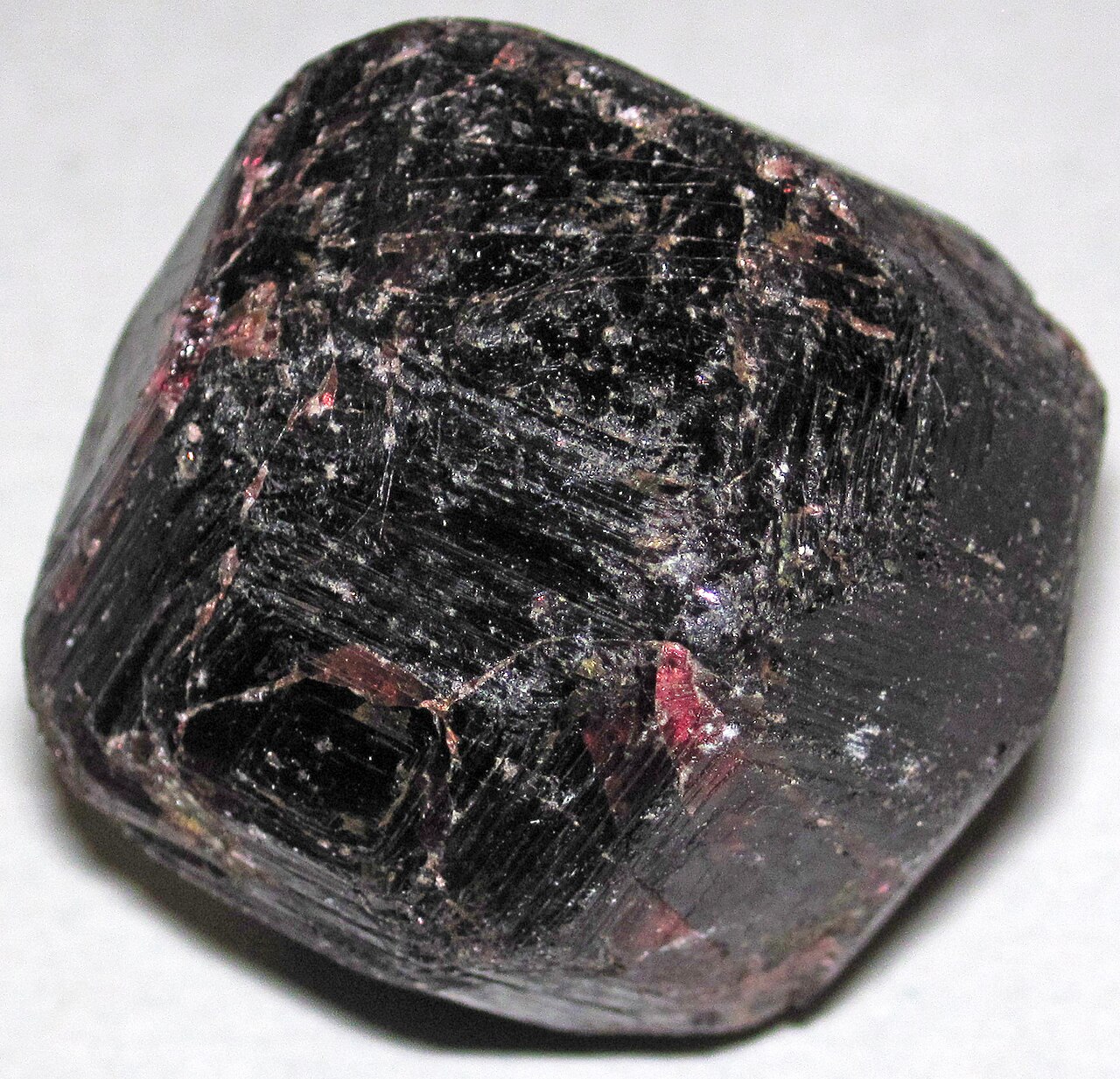
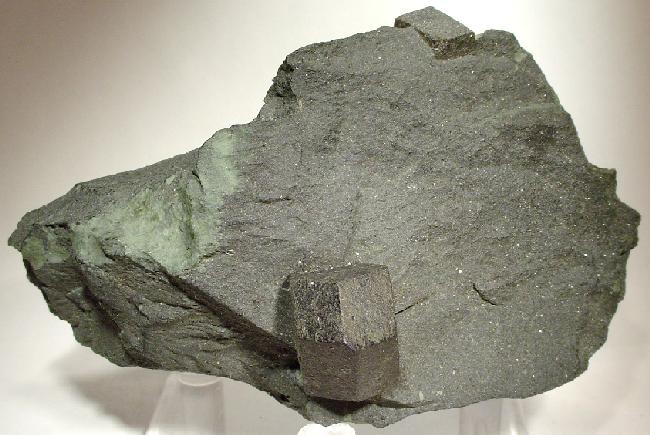
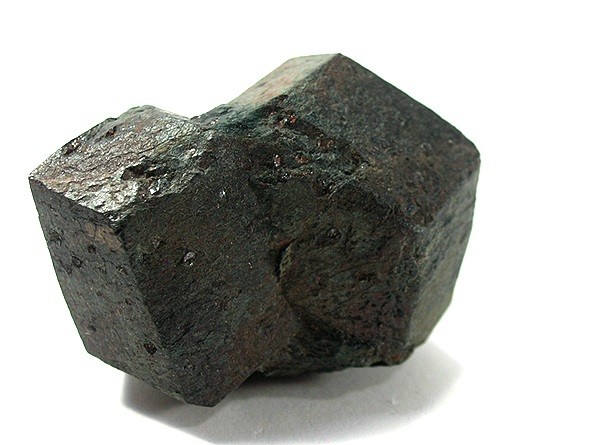
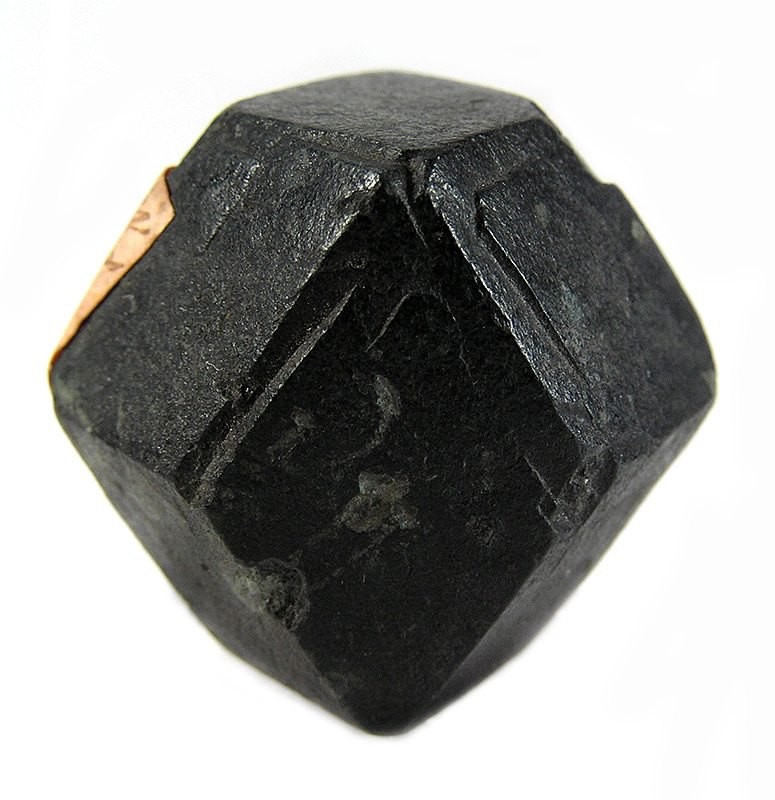
- Dodecahedral, trapezohedron, hexoctahedral
Lore & Background
The word 'garnet' comes from the 14th-century Middle English word gernet, meaning dark red, borrowed from Old French grenate and Latin granatus, possibly referencing the pomegranate. Garnet species are found in every color, with reddish shades most common; blue garnets are the rarest and were first reported in the 1990s. They have no cleavage, fracturing into sharp, irregular pieces.
Reader's Guide
Garnets have been significant since the Bronze Age as both gemstones and industrial abrasives. Their wide range of chemical compositions yields many species and varieties, including almandine (the most common gem garnet), pyrope (an indicator mineral for high-pressure rocks), spessartine, and the rare blue color-change garnet discovered in the late 1990s. The ugrandite series includes andradite (with prized demantoid), grossular (including tsavorite and hessonite), and uvarovite. Garnets are used for gem identification via magnetic susceptibility and refractive index, and their hardness (6.0–7.5) makes harder species like almandine suitable for abrasives. They occur in metamorphic rocks, skarns, pegmatites, and occasionally volcanic rocks.
Did You Know?
- Blue garnets are the rarest and were first reported in the 1990s.
- Garnets have been used since the Bronze Age as gemstones and abrasives.
- The word 'garnet' comes from the 14th-century Middle English word gernet, meaning dark red.
- Garnets do not have any cleavage planes, so they fracture into sharp, irregular pieces.
Chemical Architecture and Species Diversity
Garnet is not a single mineral but a family of silicate species united by shared crystallographic and physical traits yet distinguished by markedly different chemical makeups. The group divides into two principal solid-solution series. The pyralspite series—comprising pyrope, almandine, and spessartine—features divalent magnesium, iron, or manganese at the X site paired with aluminium at the Y site, yielding the general formula [Mg,Fe,Mn]3Al2(SiO4)3. The ugrandite series—uvarovite, grossular, and andradite—substitutes calcium for the divalent cation and allows chromium, aluminium, or iron at the trivalent position, expressed as Ca3[Cr,Al,Fe]2(SiO4)3. All members are nesosilicates following the overarching X3Y2(SiO4)3 pattern, where isolated [SiO4]4− tetrahedra sit within an octahedral framework. Grossular, in particular, spawns well-known gem varieties such as hessonite and tsavorite, underscoring how a single end-member can produce visually distinct stones. This compositional flexibility is what gives the garnet group its extraordinary range of appearances and industrial applications.
Crystal Habits and Mechanical Behavior
Garnets crystallize in the isometric system, meaning their three crystallographic axes are equal in length and mutually perpendicular. Instead, the most common external forms are the dodecahedron, the trapezohedron, and the hexoctahedron. The mineral possesses no cleavage planes whatsoever; when subjected to stress it fractures along sharp, irregular conchoidal surfaces rather than splitting along predictable crystallographic directions. On the Mohs hardness scale, garnet species span roughly 6.0 to 7.5, a spread that reflects the varying strength of atomic bonds across the different chemical compositions. Harder members such as almandine have long been pressed into service as industrial abrasives. Optically, garnet's lustre ranges from vitreous—resembling polished glass—to resinous, evoking the glow of amber. Its transparency likewise varies enormously: some specimens are gem-quality and fully light-transmitting, while others are entirely opaque and suited only to abrasive or industrial use.
Etymology and Cultural Heritage
The English word "garnet" descends from the 14th-century Middle English gernet, a term meaning "dark red," which itself was borrowed from Old French grenate and ultimately from Latin granatus, rooted in granum—grain or seed. The etymology likely alludes to the pomegranate, whose fruit is packed with vivid red arils that closely mirror the shape, size, and hue of certain garnet crystals. In Indian tradition, hessonite garnet carries the name gomed in Sanskrit literature and holds a place among the Navaratna, the nine sacred jewels of Vedic astrology. The group's practical history stretches back to the Bronze Age, when humans exploited these stones both as decorative gems and as grinding abrasives. Almandine, the iron-rich end-member, was known in antiquity as the "carbuncle," a word from Latin meaning "live coal" or burning charcoal, reflecting its deep red glow. The name "almandine" itself is a corruption of Alabanda, a region in Asia Minor where such stones were cut and traded in ancient times, linking the mineral to one of the earliest known gem-working centers.
The Blue and Color-Changing Rarities
Although reddish garnets dominate the gem market, the group actually spans every color, and the rarest members are the blue and color-changing varieties. Blue pyrope–spessartine garnets were first identified in the late 1990s at Bekily, Madagascar, and have since been documented in parts of the United States, Russia, Kenya, Tanzania, and Turkey. Their striking shift from blue-green under cool light to purple under warm light is attributed to relatively high vanadium content, roughly one weight percent V2O3. Other color-changing garnets display green, beige, brown, gray, or blue tones in daylight but turn reddish or purplish-pink under incandescent illumination. For gemologists, a simple neodymium magnet test provides a quick way to separate garnet from virtually every other natural transparent stone in the jewelry trade, since garnet exhibits a characteristic magnetic pick-up response. More precise identification of individual species and varieties relies on magnetic susceptibility measurements paired with refractive-index readings, which can even quantify the percentage of each end-member species within a single gem.
Common Misconceptions (Editorial)
1. Some people think garnets are only red, but the facts show they are found in every color, with blue being the rarest.
2. It is commonly believed that garnets form only in metamorphic rocks, but they can also occur in volcanic rocks on rare occasions.
3. Many assume garnets break along flat cleavage planes like some minerals, but the facts state they have no cleavage and instead fracture into sharp, irregular pieces.
Why It Matters (Editorial)
Garnets have been valued for millennia—not just as gemstones but as practical abrasives—showing how human utility and beauty can converge in a single mineral. Their remarkable chemical diversity and rarity, like the blue garnets only discovered in the 1990s, remind us that even ancient materials still hold surprises for modern science.
Gallery
More in Gemstones 1-22
Spotted an error? Know more?
This is a living reference — every entry is fact-audited, and reader corrections feed straight into our audit queue. Suggest an edit · See this site's audit record