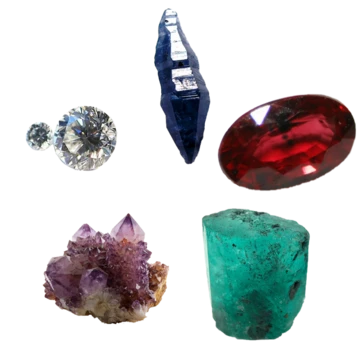
Tourmaline
A complex silicate mineral group with diverse colors and properties.

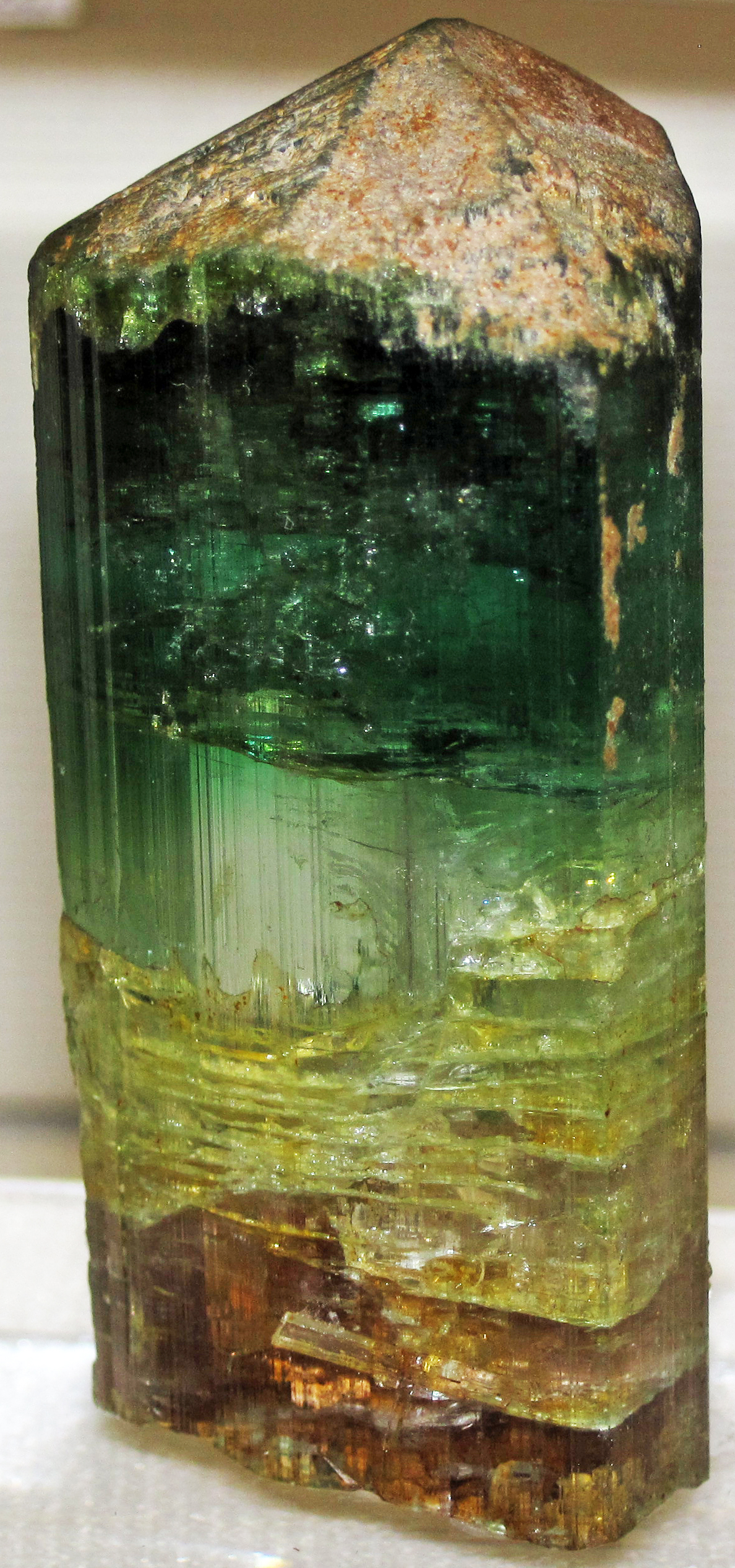
James St. John · CC BY 2.0
Tourmaline is a crystalline silicate mineral group in which boron is compounded with elements such as aluminium, iron, magnesium, sodium, lithium, or potassium. This gemstone comes in a wide variety of colors. The name is derived from the Sinhalese tōramalli, which refers to the carnelian gemstones.
- category
- Mineral group
- crystal_system
- Trigonal
- common_species
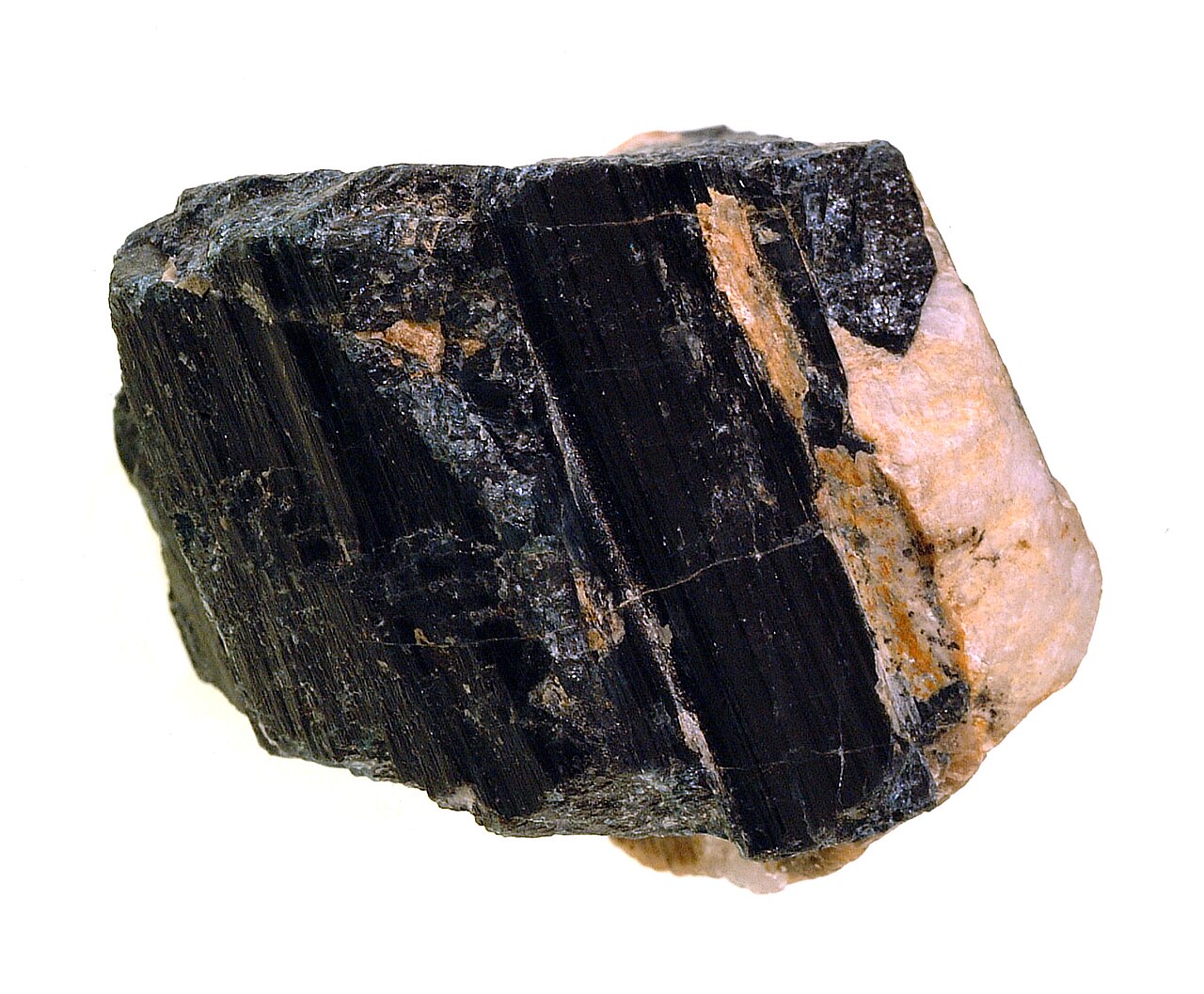
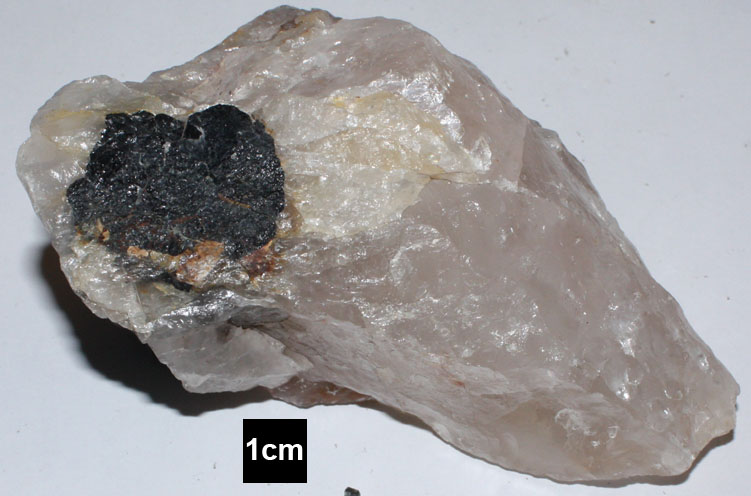
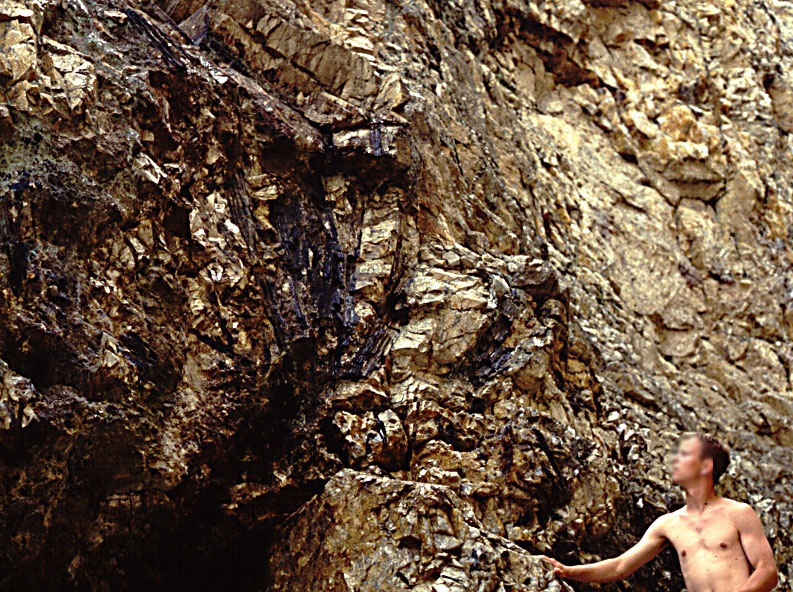
- Schorl, Dravite, Elbaite
- key_property
- Pyroelectric and piezoelectric
- color_range
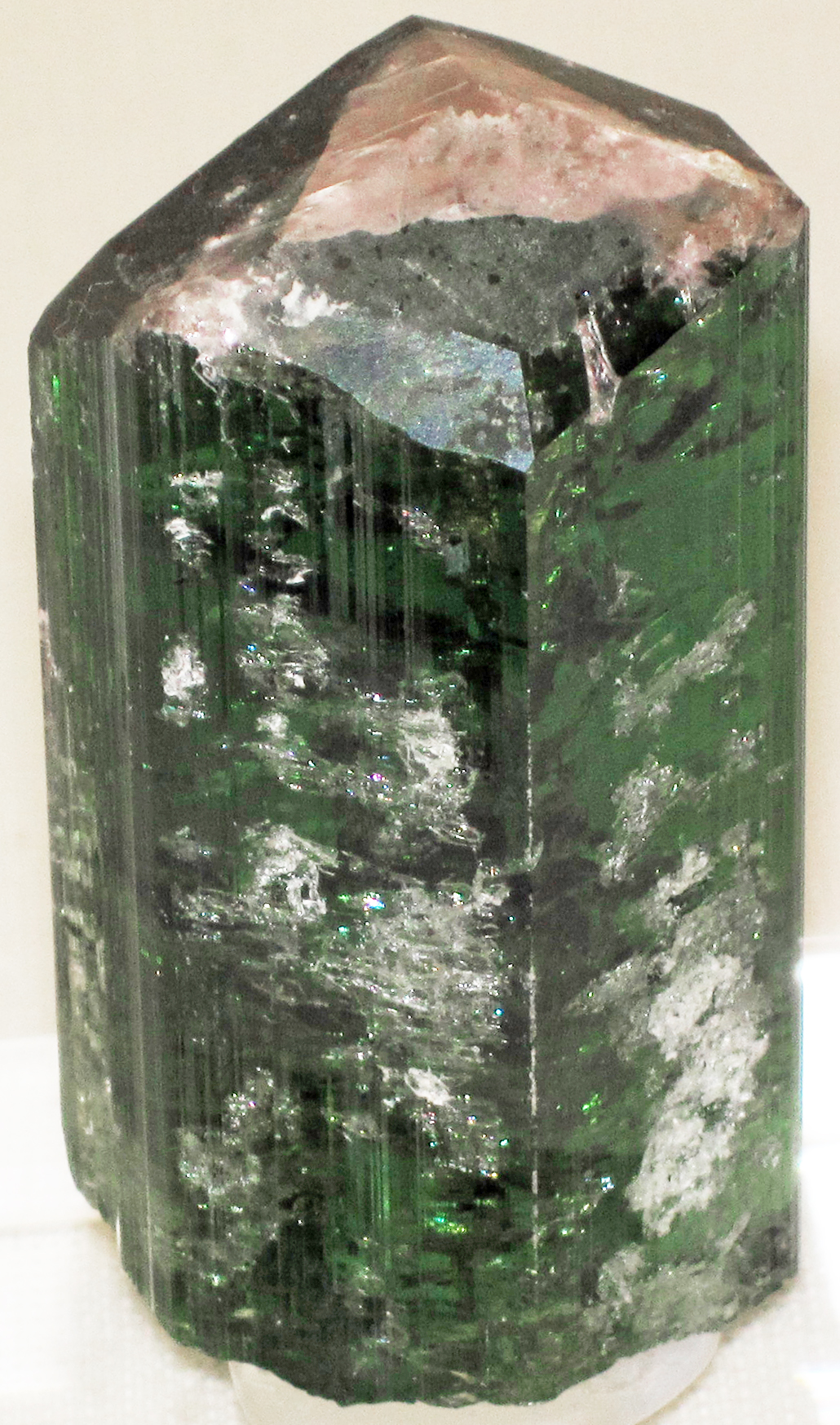
- Wide variety, including black, brown, blue, green, red, pink, yellow, colorless
- type_locality_dravite
- Dobrova near Dravograd, Slovenia
Lore & Background
Brightly colored Ceylonese gem tourmalines were brought to Europe in great quantities by the Dutch East India Company, to satisfy a demand for curiosities and gems. Tourmaline was sometimes called the 'Ceylonese Magnet' because it could attract and then repel hot ashes due to its pyroelectric properties. Tourmalines were used by chemists in the 19th century to polarize light by shining rays onto a cut and polished surface of the gem. The most common species is schorl, the sodium iron endmember, which may account for 95% or more of all tourmaline in nature. Tourmaline occurs as long, slender to thick prismatic and columnar crystals that are usually triangular in cross-section, often with curved striated faces. It is distinguished by its three-sided prisms; no other common mineral has three sides. All hemimorphic crystals are piezoelectric, and are often pyroelectric as well.
Reader's Guide
Tourmaline is chemically one of the most complicated groups of silicate minerals, with a general formula XY3Z6(T6O18)(BO3)3V3W that allows wide variation through isomorphous replacement. Its significance lies in its broad range of colors and physical properties, making it valuable both as a gemstone and as a scientific material. Historically, it was used by 19th-century chemists to polarize light, and its pyroelectric property—attracting and repelling hot ashes—earned it the nickname 'Ceylonese Magnet.' The group includes common species such as schorl (black), dravite (brown to yellow), and elbaite (many colors, including the prized watermelon tourmaline). The pink color of many tourmalines results from prolonged natural irradiation converting Mn2+ to Mn3+. Tourmaline's crystal structure is a six-member ring cyclosilicate with a trigonal system, and its hemimorphic crystals are both piezoelectric and pyroelectric.
Did You Know?
- The name 'tourmaline' is derived from the Sinhalese tōramalli, which refers to carnelian gemstones.
- Tourmaline was sometimes called the 'Ceylonese Magnet' because it could attract and then repel hot ashes due to its pyroelectric properties.
- The most common species, schorl, may account for 95% or more of all tourmaline in nature.
- The pink color of many tourmalines is the result of prolonged natural irradiation converting Mn2+ to Mn3+.
From Ceylon to the European Cabinet of Curiosities
Tourmaline's name traces back to the Sinhalese word tōramalli, a term historically applied to carnelian gemstones, suggesting that early Sri Lankan gem dealers used the label broadly for colorful stones. The mineral's journey into European consciousness came largely through the Dutch East India Company, which shipped brightly colored Ceylonese gem tourmalines across the Indian Ocean in substantial quantities to feed a growing appetite for exotic curiosities and fine stones. Once in Europe, tourmaline earned the nickname "Ceylonese Magnet" because of its pyroelectric behavior: when heated, the crystal would first attract and then repel hot ashes, a striking demonstration that fascinated natural philosophers. The gem also found practical scientific use in the nineteenth century, when chemists exploited its optical properties by directing light rays across a cut and polished surface to polarize the beam, making tourmaline a humble but valuable tool in early optical research.
Three Species, a Spectrum of Names
The tourmaline family is organized around three principal species, each carrying a name rooted in geography and chemistry. Schorl, the sodium–iron divalent endmember, dominates the group, potentially accounting for ninety-five percent or more of all naturally occurring tourmaline. Each species branches into vividly named varieties—rubellite, indicolite, verdelite, achroite—reflecting the mineral's extraordinary chromatic range.
A Formula That Defies Simplicity
Tourmaline ranks among the most chemically intricate silicate mineral groups known. Its general formula, XY3Z6(T6O18)(BO3)3V3W, contains seven structural sites, each of which can be occupied by several different cations or anions, and in some cases left vacant. This phenomenon of isomorphous replacement, or solid-solution substitution, means that a single crystal can incorporate calcium, sodium, or potassium at one site; lithium, magnesium, iron, manganese, zinc, aluminum, chromium, vanadium, or titanium at another; and hydroxyl, fluoride, or oxygen at yet another. The sheer combinatorial variety makes tourmaline a natural laboratory for studying how elements trade places within a crystal lattice.
The Three-Sided Prism
Few minerals are as instantly recognizable as tourmaline, and the reason is geometric. Belonging to the trigonal crystal system as a six-member-ring cyclosilicate, tourmaline grows as long, slender to thick prismatic and columnar crystals whose cross-section is distinctly triangular. No other common mineral presents a true three-sided prism, making the shape a reliable field identifier. The prism faces frequently display heavy vertical striations that soften the edges into a rounded triangular profile, and the crystal terminations are often asymmetrical—a trait mineralogists call hemimorphism. In fine-grained granite known as aplite, small slender tourmaline crystals commonly radiate outward in daisy-like rosettes, creating patterns that catch the eye in thin section. Tourmaline is rarely found in perfectly formed, euhedral crystals, but when it is, the result is a striking three-faced column that stands apart from the six- or four-sided prisms of quartz, beryl, or apatite.
Common Misconceptions (Editorial)
- A common misconception is that tourmaline is a single gemstone, but it is actually a group of crystalline silicate minerals, with boron compounded with various elements like aluminium, iron, or lithium. - Some may think tourmaline’s name originates from a European language, but it is derived from the Sinhalese word *tōramalli*, which originally referred to carnelian gemstones. - Another misconception is that tourmaline’s ability to attract and repel ashes is due to magnetism; in fact, this property is pyroelectric, which is why it was called the "Ceylonese Magnet."
Why It Matters (Editorial)
Tourmaline endures as a subject of fascination because its remarkable pyroelectric and piezoelectric properties link ancient curiosity with modern science, from 19th-century polarizing light experiments to ongoing material research. Its staggering variety of colors and common species like schorl also make it a touchstone for understanding how trace elements and natural irradiation can create endless beauty in a single mineral group.
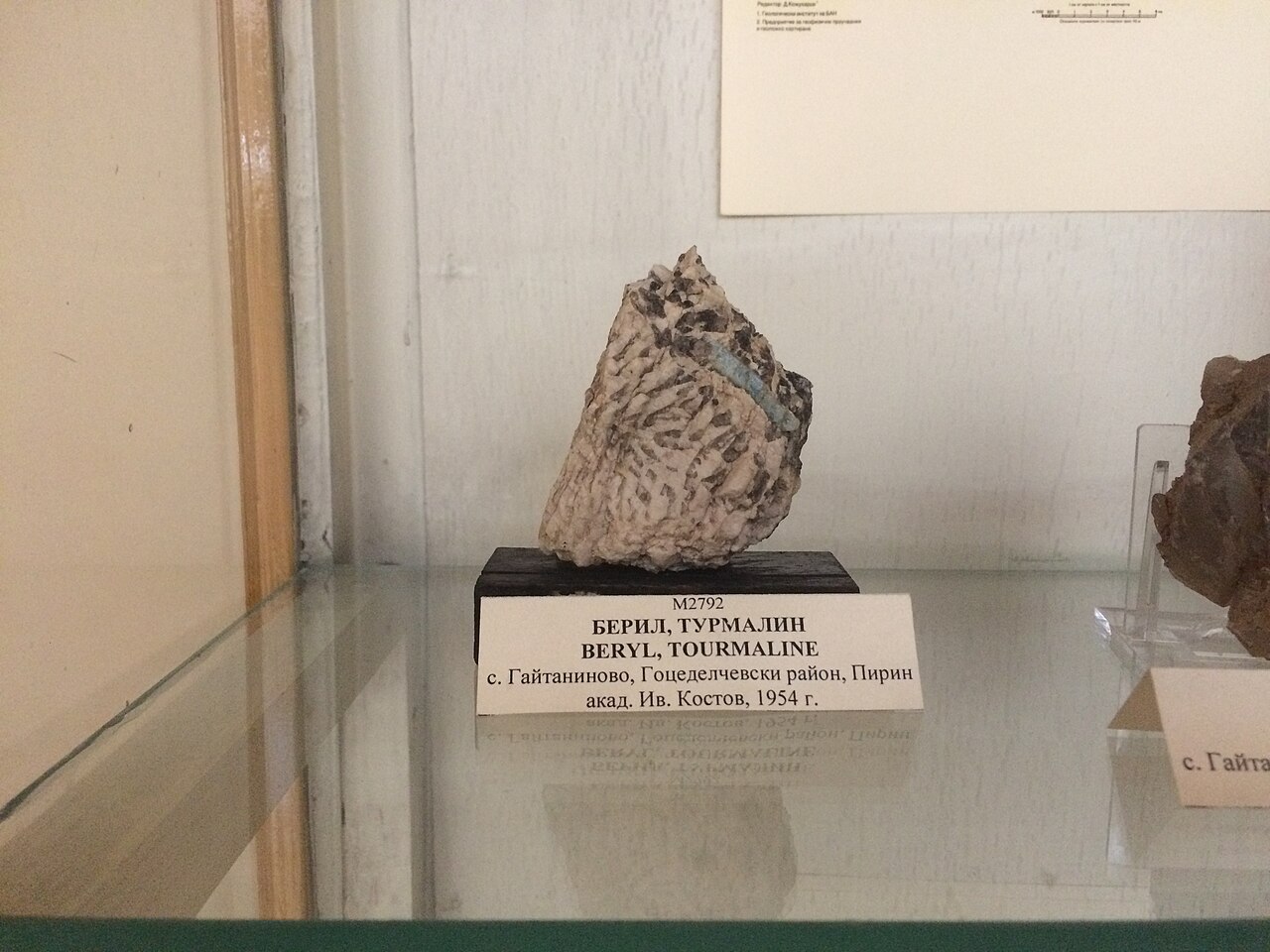
Gallery
More in Gemstones 1-22
Spotted an error? Know more?
This is a living reference — every entry is fact-audited, and reader corrections feed straight into our audit queue. Suggest an edit · See this site's audit record